
You’re on the water, the sun is rising, and you’ve got a nagging feeling that the fish are right below your boat, but you just can’t pinpoint them. That’s where a reliable fish finder changes everything. In this guide, we break down the best rated fish finders of 2026, covering portable castable units, kayak-friendly models, and advanced chartplotters. Whether you’re a weekend shore angler or a serious tournament competitor, we’ve got a pick for you.
We’ve evaluated dozens of models based on sonar technology, ease of use, display quality, and value. Our goal is to help you make an informed decision without getting lost in technical jargon. For a deeper dive into what to look for, check our expert buying guide on choosing a fish finder. Let’s get started.





Buying Guide: What to Look for in a Fish Finder
Sonar Technology: CHIRP vs. Traditional
CHIRP sonar sends a continuous sweep of frequencies, giving you crisper target separation and better definition of fish and structure. Traditional sonar uses a single frequency, which is simpler but less detailed. For the best rated fish finders, CHIRP is a must-have.
Models like the Lowrance HOOK Reveal 5 SplitShot and Humminbird Helix 5 G3 use CHIRP to deliver exceptional clarity. If you fish in deep water or around heavy cover, this technology helps you distinguish between a bass and a stump.
Display Quality and Size
A bright, high-resolution screen is essential for reading sonar returns in direct sunlight. Look for a display with high pixel count and anti-glare properties. Screen size matters too: larger screens (5 inches and up) are easier to read but take up more space on your boat or kayak.
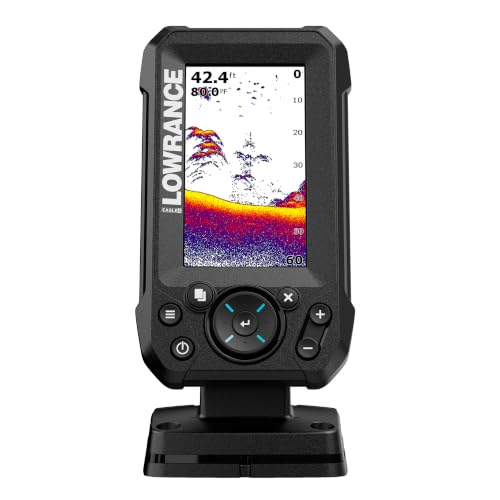
For kayak anglers, a compact unit like the Lowrance Eagle 4X offers a 4-inch portrait screen that fits in tight spaces. If you have a larger console, the Humminbird Helix 5 G3’s 5-inch display is a great balance. For more insights, see our guide to the easiest fish finders to use.
GPS and Mapping Capabilities
GPS and mapping features let you mark waypoints, track your routes, and see underwater contours. This is invaluable for returning to productive spots and exploring new water. Some units come preloaded with maps, like the Lowrance HOOK Reveal 5’s C-MAP US Inland mapping, while others allow you to create custom maps.
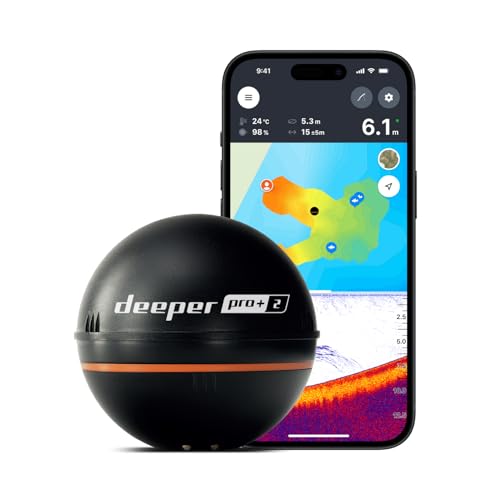
If you’re serious about navigation, consider a model with GPS, like the Humminbird Helix 5 G3 or the Deeper PRO+ 2. For a comprehensive look at GPS-equipped fish finders, check out our top picks for fish finders with GPS and maps.
Portability and Mounting Options
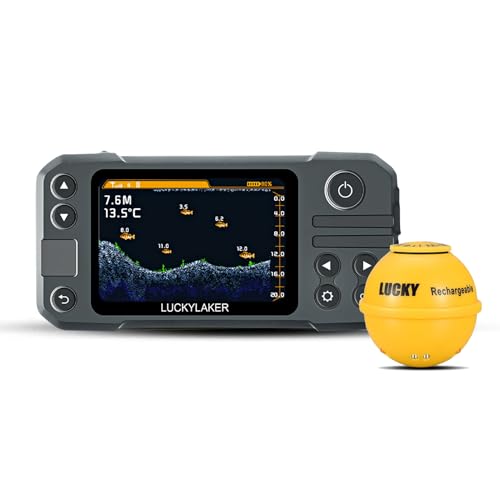
How do you plan to use your fish finder? If you fish from a kayak, shore, or ice, a portable castable unit like the Deeper Start or Venterior Portable Rechargeable Fish Finder is ideal. These eliminate the need for permanent mounting. For boaters, a fixed transducer mount is more common.
Consider the installation effort. Transom-mount transducers are straightforward, but if you prefer a no-drill option, castable sensors are the way to go. For kayak-specific advice, read our step-by-step kayak fish finder installation guide.
Final Thoughts
Choosing the right fish finder comes down to your fishing style and budget. For a feature-rich, easy-to-use unit that works from any platform, the Deeper PRO+ 2 Sonar Fish Finder is our top pick for its wireless versatility and built-in GPS. If you prefer a traditional mount with outstanding sonar clarity, the Lowrance HOOK Reveal 5 SplitShot offers FishReveal technology that makes fish pop on screen. Whichever you choose, you’ll be upgrading your angling game.
Frequently Asked Questions
What is the best rated fish finder for the money?
For the best balance of price and performance, the Humminbird PiranhaMAX 4 is a fantastic entry-level option. It offers dual beam sonar and a tilt-and-swivel mount at an affordable price. For a bit more, the Lowrance HOOK Reveal 5 adds CHIRP and GPS, making it a great mid-range choice.
Are castable fish finders any good?
Yes, castable fish finders like the Deeper Start and LUCKY Kayak Portable Fish Finder Transducer are excellent for shore, kayak, and ice fishing. They’re easy to use, require no installation, and provide real-time sonar data on your smartphone or a handheld display. They may have shorter range than fixed units, but for portability, they’re hard to beat.
What is the difference between down imaging and side imaging?
Down imaging sends sonar beams straight down to show detailed views of the bottom and structure below your boat. Side imaging scans to the left and right, giving you a wider view of underwater terrain. Both are useful, but side imaging is better for covering large areas quickly. Learn more in our comparison of down imaging and side imaging.
How do I choose a fish finder for a kayak?
For kayaks, look for a compact, portable unit with a reliable mount. The LUCKY Kayak Portable Fish Depth Finder Water is a popular choice because it’s handheld and comes with a neck strap. If you want GPS, the Deeper PRO+ 2 is castable and works with your phone, saving space. Always consider battery life and screen visibility in sunlight.