

You’re standing at the boat ramp, staring at your old fish finder’s grainy screen, wondering if that shadow below is a school of bass or a submerged log. Upgrading to a modern side imaging unit can transform your fishing, but the choice between Garmin Striker and Humminbird Helix can be tough. Both brands offer excellent options, but they cater to different needs and budgets. In this guide, we’ll break down the key differences, compare popular models, and help you decide which one deserves a spot on your console.
We’ve spent hours evaluating sonar technology, GPS features, and user interfaces to bring you a clear, practical comparison. Whether you’re a weekend angler or a tournament pro, you’ll find the information you need to make a confident choice. Let’s dive in.




Buying Guide: What to Look For in a Side Imaging Fish Finder
Sonar Technology and Imaging Quality
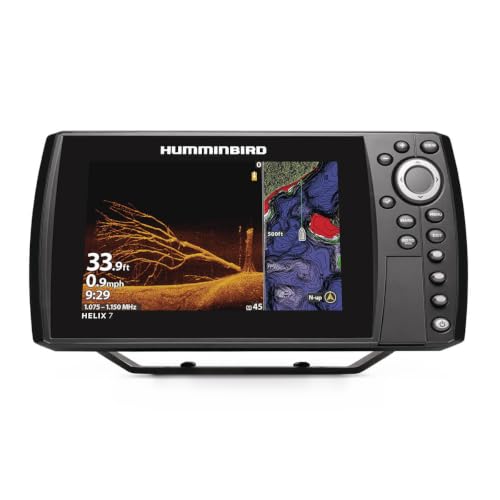
The heart of any fish finder is its sonar. Garmin’s Striker line uses CHIRP and ClearVü scanning sonar, which provides crisp, photo-like images of fish and structure. The Humminbird Helix series takes it a step further with MEGA Side Imaging and MEGA Down Imaging, offering incredible detail and a wider coverage area. If you need to see exactly what’s under and around your boat, both are excellent, but Humminbird’s MEGA technology often edges out Garmin’s standard ClearVü in raw resolution.
For your fishing style, consider how deep you fish. The Humminbird Helix 7 G4 can reach 125 feet on side imaging, while the Garmin Striker Vivid 7cv offers ClearVü down to 750 feet in saltwater. If you’re mostly in freshwater lakes, either will work, but the Helix’s side imaging gives you a broader view of underwater terrain.
GPS and Mapping Capabilities
Both brands include built-in GPS, but they differ in mapping features. Garmin Striker models come with Quickdraw Contours, which lets you create your own maps of any lake. Humminbird Helix units feature Basemap with over 10,000 lakes preloaded, plus AutoChart Live for real-time depth contour mapping. If you fish unfamiliar waters frequently, the Helix’s preloaded maps are a huge advantage. If you prefer a simple, no-fuss GPS for marking waypoints, the Striker is perfectly adequate.
Check out our humminbird helix 7 review for a deeper look at its GPS performance.
Ease of Use and Display
A fish finder is only useful if you can operate it without frustration. Garmin Striker models are known for their simple, keyed interface with dedicated buttons, making them incredibly easy to use right out of the box. The Humminbird Helix series, especially the newer G4 models, offers both touchscreen and keypad controls on some models, giving you flexibility. However, the menu systems can be more complex, requiring a learning curve.
Screen size and resolution matter too. The Garmin Striker Vivid 7cv has a 7-inch display, while the Humminbird Helix 7 has a 7-inch screen with higher resolution. The Humminbird XPLORE 10 takes it even further with a full HD 10-inch touchscreen, ideal for anglers who want a large, detailed view.
Budget and Value
Your budget plays a huge role in the decision. Garmin Striker models are generally more affordable, with the Striker 4 starting at a very accessible price point. The Humminbird Helix series spans a wider range, from the entry-level Helix 5 to the premium XPLORE 10. Consider what features are must-haves and what you’re willing to spend. For a budget-friendly option that still offers solid performance, the Garmin Striker Vivid 4cv is hard to beat. For advanced anglers who want the best imaging, the Humminbird Helix 7 G4N is a worthy investment.
If you’re leaning toward Garmin, our garmin striker vivid 7sv review highlights its strengths and weaknesses.
Final Thoughts
Choosing between Garmin Striker and Humminbird Helix ultimately comes down to your priorities. If you want the best possible side imaging and are willing to invest in a premium unit, the Humminbird Helix 7 G4 GPS Fish Finder is an outstanding choice with its MEGA imaging and extensive mapping. On the other hand, if you value simplicity and affordability without sacrificing quality, the Garmin Striker Vivid 7cv offers excellent ClearVü sonar and a user-friendly interface at a fraction of the cost. Whichever you pick, you’ll be upgrading your fishing game significantly.
Frequently Asked Questions
What is the main difference between Garmin Striker and Humminbird Helix?
The main difference lies in sonar technology and mapping. Humminbird Helix uses MEGA Side Imaging and Down Imaging for higher resolution and wider coverage, while Garmin Striker offers CHIRP and ClearVü, which are solid but not as detailed. Helix also comes with preloaded maps on many models, while Striker relies on Quickdraw Contours for custom mapping.
Can I use a Garmin Striker for ice fishing?
Yes, the Garmin Striker 4 includes a flasher mode that’s ideal for ice fishing or vertical jigging. Its portable design and battery options make it a popular choice for hardwater anglers. Just make sure to get the appropriate transducer mount for ice.
Which Humminbird Helix model is best for freshwater lakes?
For most freshwater anglers, the Humminbird Helix 7 G4N is a great balance of features and price. It offers MEGA Side Imaging, Dual Spectrum CHIRP, and AutoChart Live, making it versatile for various lake conditions. If you need a larger screen, the XPLORE 10 is a premium option.
Do Garmin Striker fish finders come with a transducer?
Yes, most Garmin Striker models include a transducer in the box, such as the GT20 on the Vivid 4cv and 7cv. This makes them a great value right out of the box. Just verify the specific model you’re considering includes the transducer, as some control head-only versions exist.
For more insights, check our garmin striker 4 review and garmin striker vivid 5cv review.