
When you are chasing striped bass along a rocky shoreline or trolling for mahi-mahi miles offshore, your fish finder must handle saltwater conditions with clarity and precision. The best saltwater fish finder combines rugged construction, powerful sonar, and reliable navigation to help you locate fish in challenging marine environments. This guide covers seven top-rated side imaging fish finders from Garmin, Lowrance, and Humminbird, each verified for coastal use in 2026.
Whether you are a weekend angler or a seasoned charter captain, we break down the key features that matter most for saltwater fishing. For a deeper look at how two leading brands compare, check out our lowrance elite FS vs HDS pro.




Buying Guide
Sonar Technology and Saltwater Performance
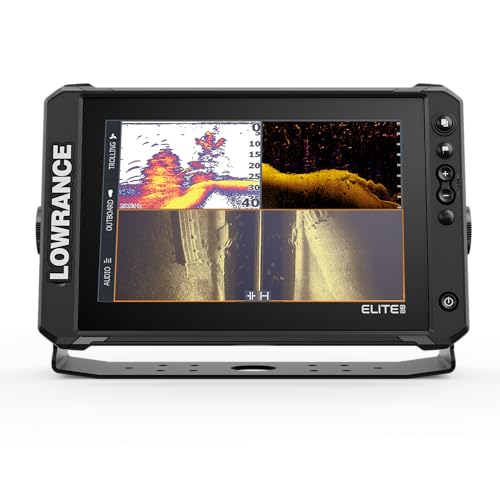
Saltwater environments demand sonar that cuts through varying depths and salinity. Look for CHIRP technology, which provides clearer target separation and better fish detection in deep water. Side imaging with a wide range, like the 200-foot range on the Humminbird XPLORE 10, helps you scan large areas quickly.
Models with MEGA Side Imaging+ or Active Imaging HD offer high-definition views of structure and baitfish. For a budget-friendly option that still delivers solid performance, read our review of the best fish finder under $1000.
GPS and Chartplotting for Coastal Navigation
A reliable GPS is essential for marking waypoints, following depth contours, and navigating back to your launch. Built-in maps like Humminbird Basemap or Garmin Navionics+ cover thousands of lakes and coastal areas. For saltwater fishing, preloaded coastal charts save time and ensure accuracy.
Real-time mapping features such as AutoChart Live let you create custom depth maps as you fish. This is particularly useful in unfamiliar saltwater zones where chart data may be limited.
Display Quality and Sunlight Readability
On a bright, sunny day offshore, a dim screen can ruin your fishing experience. Choose a fish finder with a high-resolution, sunlight-readable display. Touchscreens, like the 10-inch HD display on the Humminbird XPLORE 10, offer intuitive control and crisp visuals.
Larger screens, such as the 12-inch SolarMAX HD on the Lowrance HDS PRO 12, allow split-screen views of sonar, charts, and radar. If you are comparing display sizes, our humminbird XPLORE 10 vs helix 10 can help you decide.
Connectivity and Integration
Saltwater anglers often run multiple electronics, from trolling motors to radar. Ensure your fish finder supports NMEA 2000, Ethernet, and Wi-Fi for seamless networking. The Garmin ECHOMAP UHD2 models, for example, wirelessly connect to Force trolling motors for route following and battery monitoring.
Integration with live sonar systems, like ActiveTarget 2, is a game-changer for seeing fish and lure movement in real time. For a detailed look at a specific model, read our humminbird XPLORE 9 review.
Final Thoughts
Choosing the best saltwater fish finder comes down to your specific needs: for serious offshore anglers who demand premium sonar and mapping, the Humminbird XPLORE 10 GPS Fish Finder delivers exceptional MEGA Side Imaging+ and a vivid touchscreen, while the Garmin ECHOMAP UHD2 93sv with GT56 Transducer offers a perfect balance of value, ease of use, and reliable Garmin Navionics+ coastal charts. Both models are built to withstand the rigors of saltwater fishing and will elevate your time on the water.
Frequently Asked Questions
What is the best saltwater fish finder for deep sea fishing?
For deep sea fishing, look for a model with powerful CHIRP sonar and a large display. The Lowrance HDS PRO 12 with Active Imaging HD and a 12-inch SolarMAX HD screen is a top choice for 2026, offering excellent depth penetration and split-screen versatility.
Do I need a dedicated saltwater fish finder?
While many fish finders work in both fresh and saltwater, saltwater-specific models often feature corrosion-resistant materials and enhanced GPS maps. Units like the Garmin ECHOMAP UHD2 94sv come preloaded with coastal charts, making them ideal for saltwater use.
Can I use a freshwater fish finder in saltwater?
Yes, but you must rinse the unit and transducer with fresh water after each trip to prevent salt corrosion. Most modern fish finders, including those from Garmin and Lowrance, are built with marine-grade components that can handle saltwater exposure with proper care.
What is the difference between side imaging and down imaging for saltwater?
Side imaging scans to the left and right of your boat, covering a wide area ideal for locating structure and fish schools in shallow to mid-depth saltwater. Down imaging provides a detailed view directly beneath the boat, which is better for pinpointing fish on the bottom in deeper water. Many top models combine both for comprehensive coverage.


