

Picture this: you’re on the water at dawn, and you know there’s a school of bass lurking near that submerged brush pile, but you just can’t pinpoint it. Without a reliable fish finder with GPS, you’re left guessing, wasting precious time and fuel. That’s where an affordable fish finder GPS comes in. It’s no longer a luxury for serious anglers; it’s an essential tool that can dramatically improve your catch rate without emptying your wallet. In this guide, we’ve evaluated the top budget-friendly models that combine sonar and GPS to give you the edge you need.
Whether you’re a kayak angler, a shore fisherman, or a weekend boater, there’s a fish finder GPS out there that fits your needs and budget. We’ll break down the key features to look for, compare some of the best models on the market, and help you make an informed decision. If you’re also targeting specific species, check out our guide on the best fish finder for walleye fishing for more tailored advice.



Buying Guide: What to Look for in an Affordable Fish Finder GPS
When shopping for a fish finder GPS on a budget, it’s easy to get overwhelmed by the specs. But focusing on a few key criteria can help you narrow down the options and choose the right unit for your fishing style. Here’s what we consider essential:
Sonar Technology: CHIRP vs. Traditional
Sonar is the heart of any fish finder. Traditional 2D sonar gives you a basic view of the bottom and fish arches. CHIRP sonar, on the other hand, sends a continuous sweep of frequencies, providing crisper fish arches and better target separation. Many affordable models now include CHIRP, like the Humminbird Helix 5 G3 GPS Fish Finder, which offers Dual Spectrum CHIRP for both wide and narrow scanning. This is a huge plus for the price.
Down Imaging is another feature that’s becoming standard. It uses high-frequency sonar to create a detailed, photo-like image of the bottom, making it easier to identify structure and fish. If you’re fishing in lakes with lots of submerged timber or rocks, this is invaluable.
GPS and Chartplotting: Marking Your Spots
A fish finder with GPS is a game-changer. It allows you to mark waypoints, navigate back to productive spots, and even create your own bathymetric maps. Look for a unit with a built-in GPS receiver and a basemap that covers the lakes you fish. Some models, like the Garmin Striker 4, offer a simple waypoint map, while others, like the Humminbird Helix 5 G3, come with Humminbird Basemap, which includes 10,000+ lakes and U.S. coastlines.
For even more advanced mapping, consider a unit with AutoChart Live, which creates real-time contours of the bottom as you boat. This is a premium feature that’s now available on budget-friendly models, making it easier than ever to find those hidden drop-offs and humps.
Display Size and Readability
The display is your window to the underwater world. A larger screen (5 inches or more) is easier to read, especially when you’re splitting the screen between sonar and GPS. But size isn’t everything; brightness and resolution matter too. Look for a display with high brightness (measured in nits) and good sunlight readability. For example, the Takkicept Underwater Camera Fish Finder features a 5-inch IPS screen with 1500 nits peak brightness and a sunshade, making it perfect for bright days.
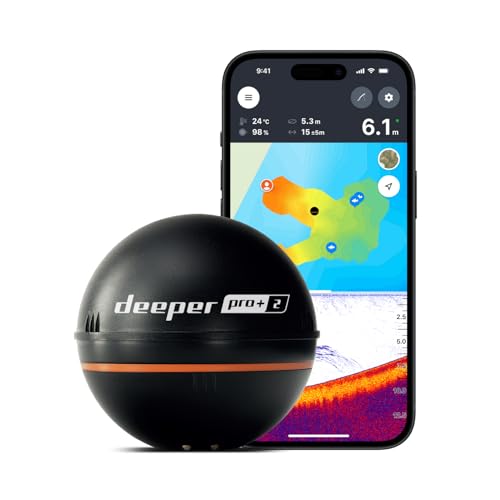
If you’re fishing from a kayak or ice fishing, a portable unit with a built-in battery might be more convenient. Castable fish finders like the Deeper PRO+ 2 Sonar Fish Finder are also a great option, as they connect to your smartphone and are incredibly portable. For more on this, check out our comparison of Garmin Striker Cast vs. Deeper.
Transducer Quality and Coverage
The transducer is what sends and receives sonar signals, so its quality directly affects performance. A lower-frequency transducer (e.g., 50 kHz) gives you wider coverage but less detail, while a higher frequency (e.g., 200 kHz) provides more detail but narrower coverage. Many modern transducers are dual-frequency or even CHIRP-capable, giving you the best of both worlds.
For side imaging, you’ll need a transducer that can send beams to the sides of your boat. This is a feature found on more expensive units, but some affordable models now offer it. If you’re primarily a kayak or small boat angler, a simple transom-mount transducer is usually sufficient.
Final Thoughts
Choosing the best affordable fish finder GPS ultimately comes down to your specific needs and fishing environment. For a feature-packed unit that won’t break the bank, the Humminbird Helix 5 G3 GPS Fish Finder offers excellent CHIRP sonar, down imaging, and built-in GPS mapping. If you prefer a portable, castable option that works with your smartphone, the Deeper PRO+ 2 Sonar Fish Finder is a versatile choice for kayak, shore, and ice fishing. Both provide exceptional value and will help you find more fish.
Frequently Asked Questions
What is the best affordable fish finder GPS combo?
For most anglers, the Humminbird Helix 5 G3 GPS Fish Finder is a top pick due to its combination of CHIRP sonar, down imaging, and built-in GPS mapping at a reasonable price. It’s a solid choice for both beginners and experienced anglers. If you’re on a tighter budget, the Garmin Striker 4 is a great entry-level option.
Can I use a fish finder GPS for ice fishing?
Yes, many fish finder GPS units are suitable for ice fishing, especially portable models. The Deeper PRO+ 2 is castable and works through the ice, and the Garmin Striker 4 can be used with a portable ice transducer. For more options, check out our ice fishing fish finders category.
Do I need side imaging in a fish finder?
Side imaging is not necessary for all anglers, but it’s a huge advantage if you fish large lakes or want to cover more water quickly. It allows you to see fish and structure to the sides of your boat, making it easier to find productive spots. For a budget-friendly option with side imaging, consider the Garmin Striker 4 with its CLEARVÜ scanning sonar.
How do I choose the right transducer for my fish finder?
The right transducer depends on your boat and fishing style. For kayaks and small boats, a transom-mount transducer is easy to install. For larger boats, a through-hull or trolling motor mount might be better. Most fish finders come with a suitable transducer, but you can upgrade for better performance. If you’re a kayak angler, you might find our kayak fish finders guide helpful.


