

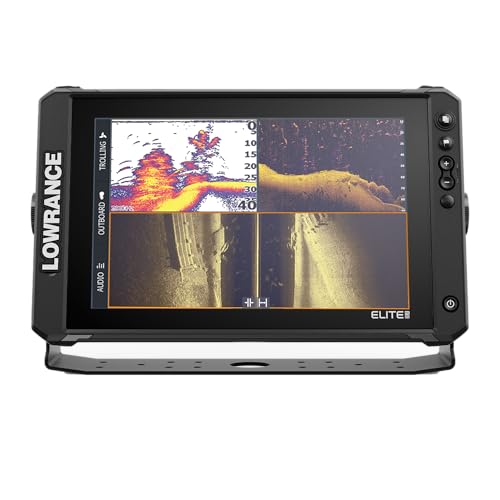
If you are serious about finding fish in structure-heavy lakes or coastal waters, side imaging is a game changer. The Lowrance Elite 7 TI review below focuses on the latest Elite FS series, which brings Active Imaging 3-in-1 sonar and preloaded C-MAP charts to the table. Whether you are upgrading from an older unit or equipping a new boat, this guide covers the top models and what to look for.
We have evaluated the Lowrance Elite FS 7, FS 9, and FS 12, along with essential accessories like transducers and GPS antennas. Our goal is to help you pick a fish finder that matches your fishing style and budget, without getting lost in technical jargon.


Buying Guide: What to Consider in a Side Imaging Fish Finder
Screen Size and Touchscreen Quality
The display is your window to the underwater world. A larger screen, like the 9-inch or 12-inch models, makes it easier to view split-screen layouts with sonar and charts simultaneously. Touchscreens are intuitive, but ensure they respond well in wet conditions.
For smaller boats or tight consoles, the 7-inch Elite FS 7 is a popular choice. It still offers high resolution and touch control, but fits where space is limited.
Sonar Technology: Active Imaging vs. Traditional
Active Imaging 3-in-1 combines CHIRP, SideScan, and DownScan with FishReveal, giving you a complete picture of fish and structure. This is a significant upgrade over older HDI transducers, as it provides clearer images and better target separation.
If you plan to add live sonar later, check that the unit is ActiveTarget ready. This future-proofs your investment and lets you watch fish react to your lure in real time.
Chartplotting and GPS
Preloaded C-MAP Contour+ charts are a huge plus, offering 1-foot contours on thousands of lakes. This helps you locate ledges, drop-offs, and other fish-holding spots with precision. For even better GPS accuracy, consider adding the Point-1 antenna with built-in compass.
If you often fish unfamiliar waters, having detailed maps onboard saves time and increases your catch rate.
Networking and Connectivity
Modern fish finders are part of a connected fishing system. Wireless, NMEA 2000, and Ethernet ports allow you to share sonar, charts, and waypoints with other devices. This is essential if you have a trolling motor with GPS or want to link multiple displays.
For a deep dive into side imaging technology, check our side imaging fish finder category for more comparisons.
Final Thoughts
After reviewing the lineup, the Lowrance Elite FS 7 Fish Finder with Active stands out as the best balance of features and value for most anglers, while the Lowrance Elite FS 12 Fish Finder with Active is ideal for those who want the largest screen and most advanced networking. Both deliver exceptional side imaging and are ready for live sonar upgrades, making them strong investments for 2026.
Frequently Asked Questions
Is the Lowrance Elite FS 7 worth buying in 2026?
Yes, the Elite FS 7 offers Active Imaging 3-in-1 sonar and C-MAP charts at a mid-range price point. It is a reliable choice for freshwater and inshore anglers who want clear side imaging without breaking the bank.
What is the difference between SideScan and DownScan?
SideScan sends sonar beams to the sides of your boat, covering a wide area to locate structure and fish away from the boat. DownScan provides a detailed view directly beneath you, showing bottom contours and fish holding close to the bottom.
Can I use the Elite FS 7 for ice fishing?
Yes, with the All Season Pack you get an ice transducer and a carrying bag, making it versatile for hardwater use. The flasher mode and high-resolution screen work well in cold conditions.
Do I need a separate GPS antenna?
The built-in GPS on the Elite FS units is accurate enough for most fishing. However, adding the Point-1 antenna improves heading and position accuracy, which is helpful for trolling or navigating narrow channels.


