

You are standing on the shore of a favorite lake, rod in hand, but the fish are not biting. You know they are out there, but without a fish finder, you are fishing blind. This Lowrance HOOK 4x review is designed for anglers on a budget who want reliable sonar technology without the premium price tag. We evaluated the HOOK 4x and compared it to other models in the Lowrance lineup to help you decide if it is the right choice for your fishing adventures. For a deeper dive into how Lowrance compares to other brands, check out our lowrance hook reveal 5 vs helix 5 comparison.



Buying Guide
Sonar Technology and Transducer Quality
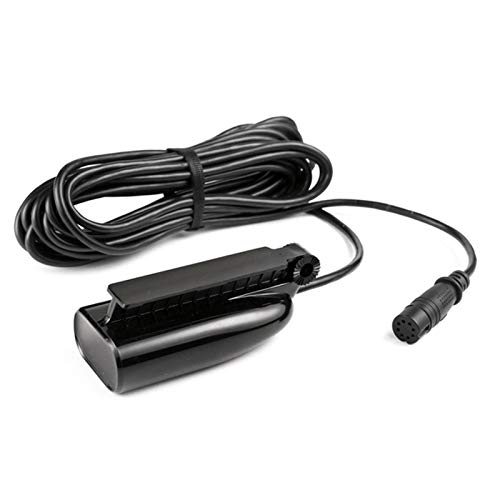
The heart of any fish finder is its sonar. The Lowrance HOOK 4x uses a 200 kHz transducer that provides a wide 60-degree cone angle, giving you double the coverage of traditional fish finders. This is ideal for covering more water quickly and finding fish in shallow to moderate depths. If you are looking for even more detailed images, consider upgrading to a model with DownScan Imaging, like the best budget fish finder for kayak picks we reviewed.
Display Quality and Readability
A fish finder is only useful if you can see the screen. The HOOK 4x features a 4.3-inch SolarMAX display that is bright and easy to read, even in direct sunlight. The color TFT screen offers crisp images with good contrast, making it simple to distinguish fish arches from structure. However, the 480 x 272 pixel resolution is lower than some competitors, so for critical detail, you may want to look at higher-resolution models.
Ease of Use and Installation
One of the biggest selling points of the HOOK 4x is its simplicity. Lowrance designed this unit with a straightforward interface and an autotuning sonar feature that adjusts settings automatically. This means you spend less time fiddling with menus and more time fishing. Installation is also a breeze, with a simple transom mount and a single cable for power and transducer. The compact size fits well on small boats, kayaks, or even ice fishing shelters.
GPS and Mapping Capabilities
The HOOK 4x lacks built-in GPS, which is a key limitation compared to the HOOK Reveal series. If navigation and marking waypoints are important to you, you will need to consider a model with GPS, such as the Lowrance HOOK Reveal 5 SplitShot. However, for anglers who primarily fish familiar waters or use a separate GPS device, the HOOK 4x remains a solid choice for basic fish finding.
Final Thoughts
After reviewing the Lowrance HOOK 4x, we believe it is an excellent entry-level fish finder for anglers who want reliable sonar performance without the complexity or cost of higher-end models. Its wide cone angle, easy-to-read display, and autotuning sonar make it a great choice for beginners or for use on a secondary boat. For those who need GPS and more advanced sonar, we recommend stepping up to the Lowrance HOOK Reveal 5 SplitShot, which adds DownScan Imaging and preloaded maps. Alternatively, if you are looking for a replacement transducer, the Lowrance SplitShot Skimmer Transducer is a reliable upgrade that works with many HOOK2 models.
Frequently Asked Questions
Does the Lowrance HOOK 4x have GPS? No, the Lowrance HOOK 4x does not include a built-in GPS receiver. It is a dedicated fish finder without chart plotting or waypoint marking capabilities. If you need GPS, consider the Lowrance HOOK Reveal series.
What transducer does the Lowrance HOOK 4x use? The HOOK 4x comes with a 200 kHz bullet skimmer transducer that provides a wide 60-degree cone angle. This transducer offers good coverage for shallow to moderate depths and includes a built-in temperature sensor.
Is the Lowrance HOOK 4x good for ice fishing? Yes, the HOOK 4x is a popular choice for ice fishing due to its compact size, bright display, and simple operation. You can use it with a portable ice fishing kit or mount it on a shuttle. Its autotuning sonar works well in cold conditions.
Can I use the Lowrance HOOK 4x in saltwater? Yes, the Lowrance HOOK 4x is designed for both freshwater and saltwater use. However, you should rinse the transducer and display with fresh water after each saltwater trip to prevent corrosion and ensure longevity.
