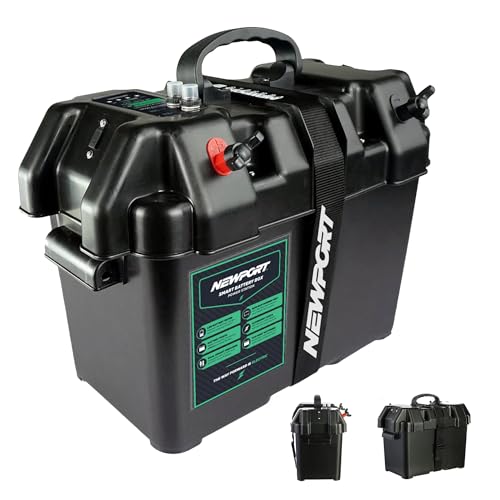

You are on the water, the fish are biting, and suddenly your trolling motor sputters to a halt. A dead battery can ruin the best fishing day. That is why choosing the best deep cell battery for trolling motor is essential for any angler who wants reliable, all-day power. In this guide, we have evaluated seven top batteries to help you find the perfect match for your boat and fishing style.
Whether you run a kayak, jon boat, or bass rig, the right deep cycle battery keeps your motor humming through long days on the water. We break down lithium and AGM options, key features, and what to consider before you buy. For more on pairing your battery with the right motor, check out our guide to the best boat battery for electric trolling motor.


Buying Guide: What to Look for in a Deep Cell Battery
Battery Chemistry: Lithium vs. AGM
The first decision is whether to go with lithium iron phosphate (LiFePO4) or absorbed glass mat (AGM). Lithium batteries are lighter, last longer, and provide consistent voltage until fully drained. AGM batteries cost less upfront and are a proven choice for smaller boats and occasional use.
For serious anglers who fish frequently, lithium offers clear advantages: it weighs up to 60 percent less than AGM and can handle thousands of deep discharge cycles. If you are on a tighter budget or only fish a few times a year, a quality AGM battery like the Mighty Max Battery 12V 55Ah Power Boat Pontoon can serve you well.
Capacity and Run Time
Battery capacity is measured in amp-hours (Ah). A 100Ah battery delivers one amp for 100 hours, or more realistically, 50 amps for two hours. For a 12-volt trolling motor drawing 30 to 50 amps at full speed, a 100Ah battery gives you about two to three hours of continuous running.
If you fish on large lakes or need all-day power, consider a 100Ah lithium battery. For smaller watercraft or short trips, a 50Ah or 55Ah AGM battery may be sufficient. Always match your battery capacity to your motor’s draw and your typical day on the water.
Weight and Size
Weight matters, especially for kayak anglers or those who carry batteries to and from the dock. Lithium batteries weigh around 21 to 24 pounds for a 100Ah model, while an equivalent AGM battery can weigh 60 pounds or more. A lighter battery reduces strain on your boat and makes installation easier.
Size is also critical. Most trolling motor battery boxes follow BCI Group 24 or Group 31 standards. Check your battery compartment dimensions before buying. Many lithium batteries are designed as drop-in replacements for standard lead-acid sizes, making upgrades simple.
Cycle Life and Warranty
Cycle life indicates how many times you can discharge and recharge the battery before its capacity drops significantly. Lithium batteries typically offer 4,000 to 15,000 cycles, while AGM batteries last around 300 to 500 cycles. A longer cycle life means lower cost per use over the battery’s lifetime.
Most lithium batteries come with a 5-year warranty, and some extend to 10 years. AGM batteries usually have a 1-year warranty. For frequent anglers, investing in a lithium battery with a solid warranty saves money and hassle in the long run. For more on matching your battery to your motor, see our best battery for electric trolling motor.
Final Thoughts
After reviewing all seven options, the CHITOLI 12V 100Ah TM LiFePO4 Battery stands out as the best all-around choice for most anglers, offering excellent cycle life, a lightweight Group 24 design, and strong value. If you need a budget-friendly AGM option for smaller boats, the Mighty Max Battery 12V 55Ah Power Boat Pontoon delivers dependable power at a low cost. Whichever you choose, a quality deep cell battery will keep your trolling motor running strong trip after trip.
Frequently Asked Questions
How long does a 100Ah deep cycle battery run a trolling motor?
A 100Ah battery running a trolling motor that draws 30 amps at full speed will last about 3.3 hours. At lower speeds, you can get 6 to 10 hours of run time. Lithium batteries maintain consistent voltage, so your motor performs well until the battery is nearly empty.
Can I use a lithium battery in my old trolling motor?
Yes, most lithium batteries are drop-in replacements for lead-acid batteries. They fit standard Group 24 or Group 31 battery boxes and work with most trolling motors. Make sure your charger is compatible with lithium chemistry, or use a dedicated LiFePO4 charger.
What is the difference between a deep cycle battery and a starting battery?
A deep cycle battery is designed to provide steady power over a long period and can be discharged deeply without damage. A starting battery delivers a short, high burst of power to start an engine and should not be deeply discharged. For trolling motors, always use a deep cycle battery. For more details, read our guide on boat batteries for electric trolling motors.
How do I maintain a deep cycle battery for trolling motor use?
For lithium batteries, minimal maintenance is needed: keep them clean, store them in a cool dry place, and recharge after each use. For AGM batteries, check terminal connections and keep them fully charged when not in use. Avoid deep discharges below 50 percent for AGM to extend lifespan.