
Imagine you are miles offshore, the sky darkens, and a sudden squall kicks up waves. Your only lifeline to the Coast Guard, other vessels, and weather updates is a reliable VHF marine radio. Whether you are a seasoned angler, a weekend cruiser, or a kayak explorer, having the best VHF marine radio on board is not just a convenience—it is a safety essential. This guide cuts through the noise to bring you seven top-rated models from trusted brands like Uniden, ICOM, and COBRA, evaluated for performance, durability, and value. We also share practical buying advice to help you choose the right unit for your vessel and budget. For more on building a complete onboard electronics setup, check out our guide to the best fishfinder GPS combo for small boat.




Buying Guide: What to Look for in a VHF Marine Radio
Fixed-Mount vs. Handheld: Which Form Factor Fits Your Boat?
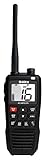
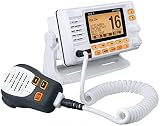
Fixed-mount radios like the Uniden UM725 series offer higher transmit power (typically 25 watts) and a larger, more readable display, making them ideal for center consoles, cabin cruisers, and larger fishing boats. They are permanently installed, so you never have to worry about battery life or dropping the unit overboard. Handheld models such as the Cobra BlueBound 350 and Uniden Atlantis 275 provide portability and are perfect for kayaks, dinghies, or as a backup on larger vessels. Consider your primary use: if you spend most of your time at the helm, a fixed-mount is the way to go; if you need to move around or have limited space, a handheld offers unmatched flexibility.
Waterproofing and Buoyancy: Staying Operational in Wet Conditions
Marine radios live in a harsh environment. Look for an IPX7 or IPX8 waterproof rating, which ensures the unit can survive immersion in water. The Uniden UM725 boasts an IPX8 rating, meaning it can be submerged deeper than 1 meter for extended periods. For handhelds, buoyancy is a game-changer: the Uniden Atlantis 275 and Icom M25EVO both float, so if they go overboard, you can retrieve them. The Cobra BlueBound 350 also floats, adding an extra layer of security. Never settle for a radio that cannot handle a splash or a dunk—your communication depends on it.
GPS Integration and NOAA Weather Alerts: Navigation and Safety Features
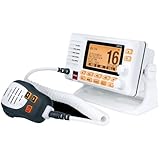
Built-in GPS allows your radio to transmit your exact position in an emergency (DSC), which can be a lifesaver. The Uniden UM725G and UM725GBT include GPS, while the UM725 does not. If you boat in unfamiliar waters or offshore, GPS integration is highly recommended. NOAA weather alerts keep you informed of changing conditions; all the radios in this roundup support this feature. For anglers who also rely on navigation electronics, pairing a GPS-equipped radio with a quality best chartplotter for saltwater creates a comprehensive safety and navigation system.
Battery Life and Charging Options: Staying Powered on the Water
For handheld radios, battery life is critical. The Icom M25EVO offers a long-lasting lithium-ion battery and convenient USB-C charging, so you can top it off from a power bank or boat USB port. The Cobra BlueBound 350 also features USB-C, while the Uniden MHS75 uses standard AA batteries—a reliable backup if you cannot recharge. Fixed-mount radios draw power from your boat’s battery, so ensure your electrical system can handle the load. Consider how long you spend on the water and whether you have access to charging facilities when choosing a handheld model.
Final Thoughts
Choosing the best VHF marine radio ultimately comes down to your boating style and priorities. For the angler who demands the largest display and built-in GPS, the Uniden UM725GBT Marine VHF Radio, All USA, Canada is a powerhouse that combines Bluetooth connectivity with a crystal-clear screen. If portability and peace of mind are your main concerns, the Uniden Atlantis 275 Handheld Two-Way VHF Marine floats, offers 6 watts of power, and is fully submersible—perfect for kayaks or as a reliable backup. Whichever you choose, investing in a quality VHF radio is one of the smartest decisions you can make for safety on the water.
Frequently Asked Questions
Do I need a license to operate a VHF marine radio in the US?
No, recreational boaters in the United States do not need a license to operate a VHF marine radio on domestic waters. However, if you travel internationally, a Ship Station License may be required. Always check current regulations for your area.
What is the difference between a fixed-mount and handheld VHF radio?
Fixed-mount radios are permanently installed on your boat and offer higher transmit power (up to 25 watts) and larger displays, making them ideal for larger vessels. Handheld radios are portable, battery-powered, and perfect for small boats, kayaks, or as a backup. Both are essential for safety, but your choice depends on your primary use.
How important is GPS in a VHF marine radio?
GPS integration is highly valuable because it enables Digital Selective Calling (DSC), which automatically transmits your position during an emergency. This can significantly speed up rescue efforts. If you boat in offshore or remote areas, a radio with built-in GPS is strongly recommended. For inshore or lake use, it is less critical but still a nice feature.
Can I use a VHF marine radio on land?
Technically yes, but it is not recommended and may be illegal in some areas. VHF marine radios are designed for maritime use and can interfere with land-based communications. If you need a radio for hiking or camping, consider a dedicated land mobile radio (GMRS or FRS) instead. For boating, stick with a marine VHF for optimal performance and compliance. To learn more about marine electronics, explore our Fishing Electronics category.