
You’re gliding across a calm lake, the only sound being the gentle splash of your paddle. But your arms are tired, and you’re missing prime fishing spots because you can’t cover enough water. Adding a trolling motor to your canoe changes everything: it frees your hands for casting, lets you hold position in a breeze, and quietly sneaks you up on fish. In this guide, we review the top transom-mount electric motors that balance power, weight, and battery life for canoes and kayaks.
We’ve evaluated five leading models from Newport Vessels, MUSESPANI, and Minn Kota, focusing on thrust, shaft length, speed control, and durability. Whether you paddle a solo canoe or a tandem fishing rig, you’ll find a motor that fits your setup and budget. For a broader look at transom options, check out our best transom mount electric trolling motors guide.


Buying Guide: What to Consider in a Canoe Trolling Motor
Thrust: Match Power to Your Canoe
Thrust is the pulling force that moves your boat. For canoes and kayaks, 30 to 55 pounds of thrust is usually sufficient. Lighter solo canoes do fine with 36lb thrust, while heavier fishing rigs or windy conditions call for 55lb or more. The MUSESPANI 65lb model offers extra muscle if you carry gear or face currents.
Remember that more thrust means more battery draw. A 36lb motor on 12V is efficient for all-day trips, while a 55lb motor delivers stronger acceleration but may need a larger battery. Choose based on your typical water conditions and how long you stay out.
Shaft Length: Reach the Water Properly
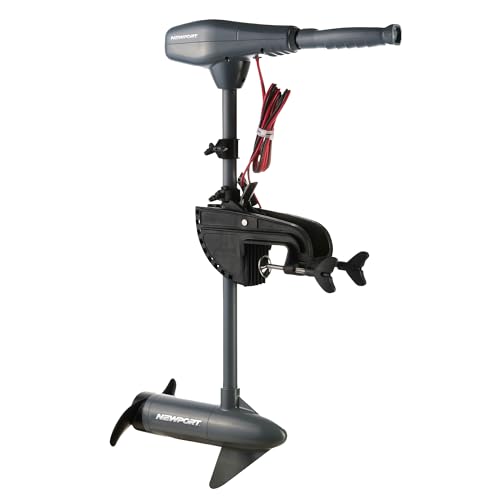
The shaft length determines how deep the prop sits below the surface. For canoes, a 24 to 30 inch shaft is standard. A shorter shaft (24″) works for flat-bottomed canoes, while a 30″ shaft suits deeper V-hulls or when you mount the motor higher on the transom. The Newport Kayak Series 36lb comes with a 24-inch shaft, ideal for low-profile craft.
If you often fish from a raised seat, a longer shaft prevents cavitation. Measure your transom height and add a few inches for clearance. Most motors offer adjustable mounting brackets to fine-tune the depth.
Speed Control and Maneuverability
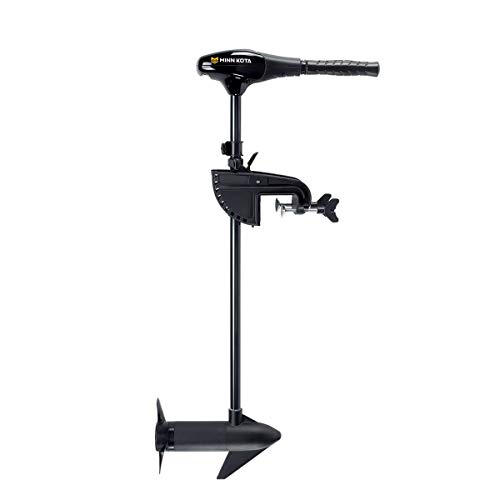
Variable speed settings let you troll slowly for fish or move quickly between spots. Look for at least 5 forward speeds and 3 reverse. The Newport NV-Series 55lb and the Minn Kota Endura C2 both offer 8 speeds, giving you precise control. Telescoping tiller handles, like those on the Newport models, make steering comfortable from any seating position.
Some motors include cruise control, like the MUSESPANI, which locks a speed for hands-free operation. This is handy for long trolling runs. For more on speed and control, see our best trolling motor for the money picks.
Durability and Water Resistance
Saltwater environments corrode standard motors quickly. If you paddle in coastal areas, choose a saltwater-rated motor with corrosion-resistant materials like stainless steel, magnesium, and zinc. The Newport Vessels models are explicitly saltwater-rated, while the MUSESPANI uses stainless steel and plastic. For freshwater-only use, the Minn Kota Endura C2 is a reliable choice with reinforced composite construction.
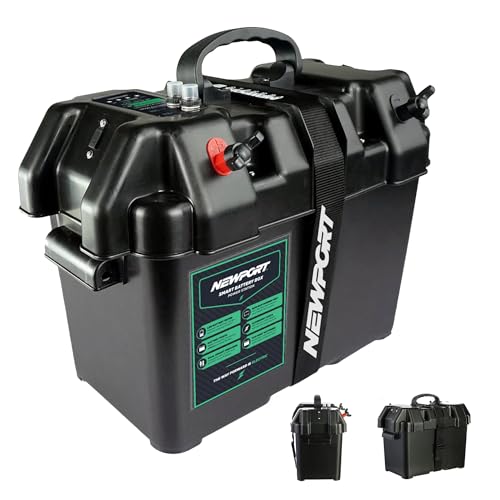
Always rinse your motor with fresh water after saltwater trips. A motor with a sealed head and waterproof connections will last longer. Check for LED battery indicators, like those on the Newport models, to avoid unexpected power loss.
Final Thoughts
Choosing the right trolling motor for your canoe comes down to balancing thrust, shaft length, and battery efficiency. For most paddlers, the Newport NV-Series 36lb Thrust Trolling Motor 12V offers a perfect blend of lightweight power and saltwater durability, while the 65lbs Thrust Electric Trolling Motor for Boats from MUSESPANI gives you extra muscle for heavier loads and faster travel. Both are reliable companions for a day on the water.
Frequently Asked Questions
Can I use a trolling motor on a canoe?
Yes, absolutely. A transom-mount trolling motor can be clamped to the stern of most canoes, providing quiet, efficient propulsion. Just ensure your canoe has a flat transom area or use an adapter bracket for curved hulls.
How much thrust do I need for a canoe?
For a standard canoe, 30 to 55 pounds of thrust is ideal. A 36lb motor works well for solo paddlers and calm waters, while 55lb thrust gives you extra power for wind, current, or carrying gear. The MUSESPANI 65lb is a great option for larger canoes or if you want speed.
What battery should I use with a canoe trolling motor?
Most 12V trolling motors require a deep-cycle marine battery. For a 36lb motor, a 50Ah battery is sufficient; for 55lb thrust, consider a 100Ah battery for longer runtime. Lithium batteries are lighter and last longer but cost more. Always use a circuit breaker as recommended.
Are trolling motors quiet enough for fishing?
Yes, electric trolling motors are significantly quieter than gas outboards. Models like the Newport and Minn Kota are designed for stealth, with quiet operation that won’t spook fish. The MUSESPANI boasts a 50 dB noise level, making it nearly silent.
For more on 12V options, see our top 12V bow mount trolling motors guide.
If you’re considering a 24V system for heavier canoes, check our best 24 volt transom mount trolling motor article.