

You’re on the water, the fish are biting, but your boat drifts with every gust of wind. You need precise control to stay on the spot, and that’s where a reliable transom mount trolling motor comes in. Whether you’re in a kayak, a jon boat, or a larger fishing rig, choosing the right one can make or break your day. In this guide, we’ll walk you through the key considerations and review the top models for 2026.
We’ve evaluated a range of transom mount trolling motors from trusted brands like Newport Vessels and Minn Kota, focusing on thrust, shaft length, saltwater durability, and ease of use. Our goal is to help you find the perfect motor to match your vessel and fishing style. If you’re also looking for a fish finder to complement your setup, check out our guide on the best kayak fish finder.

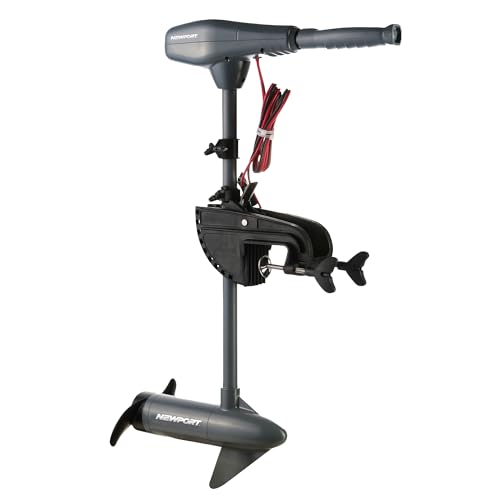

Buying Guide: What to Consider in a Transom Mount Trolling Motor
Thrust: Match Power to Your Boat
Thrust is the motor’s pulling power, measured in pounds. A 30 to 36 lb thrust is ideal for kayaks, canoes, and other ultra-light craft. For small aluminum boats and inflatables, a 46 to 55 lb thrust offers a good balance of power and battery efficiency. If you have a larger jon boat or frequently face wind or current, consider a 62 lb thrust or higher.
Remember, more thrust means better control, but it also draws more battery. Choose the right thrust for your vessel to avoid underpowering, and when in doubt, it’s often wise to step up a size for better handling.
Shaft Length: Get the Right Fit
The shaft length determines how deep the propeller sits in the water. For kayaks and small boats with low freeboard, a 24 to 30 inch shaft usually works well. For higher-sided vessels or those with a raised transom, a 36 inch shaft is often necessary to keep the prop submerged and avoid cavitation. Measure your transom height to ensure you get a shaft that reaches the water properly.
An incorrect shaft length can lead to poor performance and unnecessary strain on the motor. Always check the manufacturer’s recommendations for your boat type.
Saltwater vs. Freshwater: Durability Matters
If you fish in saltwater, you need a motor built to resist corrosion. Look for models with stainless steel hardware, anodized aluminum, or composite shafts. Saltwater-rated motors, like those from Newport Vessels, are designed to withstand the harsh marine environment, ensuring longevity and reliable performance.
Freshwater-only motors may not hold up as well in salt, so choose accordingly. For more insights on fish finders that work in various conditions, see our best fish finder guide.
Final Thoughts
Choosing the right transom mount trolling motor comes down to your boat size, typical conditions, and budget. For most anglers with small to medium boats, the Newport NV-Series 55lb Thrust Saltwater Transom offers a versatile balance of power and features, while the Minn Kota Endura C2 Transom-Mount Electric is a reliable freshwater choice for those who prefer a trusted brand. Whichever you pick, you’ll be ready to hold your position and focus on the catch.
Frequently Asked Questions
What size transom mount trolling motor do I need?
The size depends on your boat’s weight and length. As a rule of thumb, use 2 to 3 pounds of thrust per 100 pounds of boat weight. For a kayak, 30 to 36 lb is sufficient; for a 14-foot jon boat, 55 lb is a good choice; and for larger vessels, consider 62 lb or more. Check our transom trolling motors category for more details.
Can I use a transom mount trolling motor in saltwater?
Yes, but only if the motor is specifically rated for saltwater use. Look for corrosion-resistant materials like stainless steel and anodized aluminum. Newport Vessels’ NV-Series motors are saltwater-rated, making them a reliable choice for inshore and offshore fishing.
How long does a trolling motor battery last?
Battery life varies based on thrust setting, battery capacity, and conditions. A 12V deep-cycle battery with 50Ah can typically run a 55 lb thrust motor for several hours at moderate speeds. Using a battery indicator helps you monitor power and avoid surprises. Always carry a spare if you plan a long day on the water.
What is the difference between a transom mount and a bow mount trolling motor?
Transom mount motors attach to the back of the boat, offering easy installation and removal. Bow mount motors are mounted on the front, providing better boat control and maneuverability, especially in wind. Transom mounts are simpler and more affordable, making them popular for smaller boats and kayaks.


